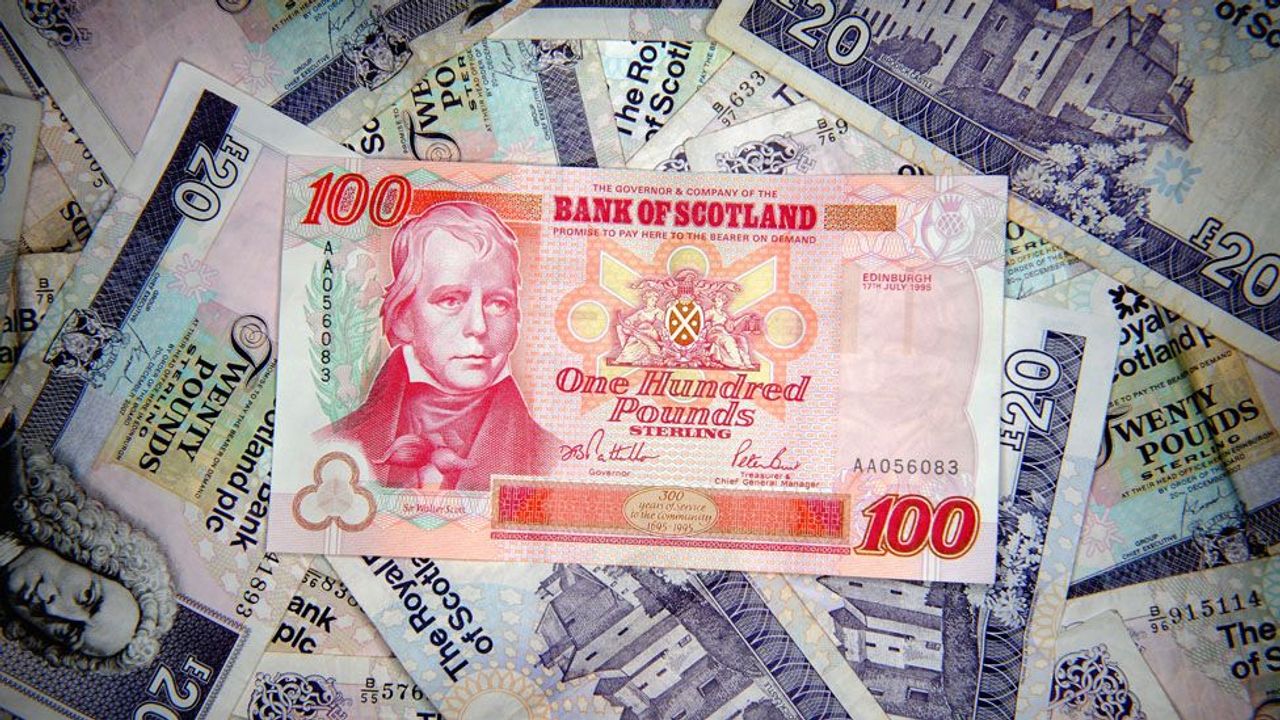
A substantial quantity of obsolete money in the United Kingdom continues to go unexchanged, with nearly £6.6 billion in old banknotes and coins still not returned to the Bank of England and Royal Mint. Despite various public initiatives encouraging people and companies to swap outdated currency, many of these notes and coins remain in use—or have been completely overlooked.
The graphic comprises former paper bills that have been substituted by more secure polymer versions, as well as round pound coins that ceased to be legal tender a few years ago. Recent statistics indicate that approximately £4.4 billion of the whole amount consists of old paper notes, whereas the additional £2.2 billion is in the form of obsolete £1 coins.
The switch to polymer banknotes started in 2016 with the launch of the plastic £5 note, succeeded by updated editions of the £10, £20, and £50 notes. The withdrawal of paper notes was necessary because of issues with longevity and the imperative to tackle counterfeiting with enhanced security measures. Nevertheless, the paper notes have not entirely vanished from wallets, drawers, or even containers stored in people’s homes. Numerous people might be unaware that these notes are no longer valid for transactions.
Even though they are no longer accepted in stores or for ordinary transactions, the Bank of England has stated that all withdrawn notes remain exchangeable at their original value—either through mail or in person—without any time limit. The Bank also permits certain high-street banks and building societies to handle these exchanges; however, this varies by institution and depends on the individual’s account status with the bank.
A similar situation exists with the £1 coin. The Royal Mint replaced the original round pound in 2017 with a 12-sided version featuring enhanced security features. The older coins were formally demonetized in October of that year, yet millions remain unreturned. Although most major retailers and banks stopped accepting the round pound shortly after the deadline, the Royal Mint continues to accept them via specific deposit services.
The reasons for this vast sum of unreturned currency are varied. Some people may have held on to older notes or coins as souvenirs, while others may have unintentionally misplaced them. It’s also common for travelers and expatriates to retain small amounts of UK currency when living abroad, unaware that the notes or coins have since been withdrawn from use. In other cases, forgotten savings stored in piggy banks, safes, or drawers can go unnoticed for years.
The challenge highlights a more extensive behavioral trend among individuals, showing that alterations in currency appearance usually result in a delay in acceptance. When fresh designs are rolled out, numerous individuals do not instantly hurry to swap the older versions, particularly when the sums are modest or tucked away for future savings. Gradually, these gathered amounts contribute to the broader total of currency left unclaimed.
From a monetary viewpoint, notes and coins that have not been returned can become a liability on the central bank’s financial statements. Even if this physical cash is not actively used, the Bank of England and Royal Mint are required to include it in their accounting until it is officially exchanged. Essentially, the worth of this unclaimed money continues as a possible claim that the public may choose to redeem at any moment.
Collectors might find that certain older coins and banknotes could now possess a value greater than their nominal worth. Unique editions or misprints—like initial polymer notes with print errors or specific commemorative coins—might command elevated prices in the numismatic market. Nevertheless, for most outdated cash still possessed by individuals, their primary worth is associated with their potential to be exchanged, rather than any added collectible value.
Both the Bank of England and Royal Mint keep urging the public to return or trade in old currency when discovered. This guarantees that people can recover the full face value of the money while also supporting a cleaner and more efficient currency system. Public awareness initiatives have featured online campaigns, details provided by financial institutions, and advice from consumer advocacy organizations.
For those in possession of old banknotes, the Bank of England offers a postal service allowing individuals to send in their notes with a completed application form. Exchanged amounts are typically refunded via cheque or bank transfer. Similarly, the Royal Mint provides information on how to return old £1 coins through deposit accounts or donation schemes.
Ultimately, the persistent presence of outdated currency serves as a reminder of the public’s diverse financial habits and the enduring challenge of modernizing a national cash system. As digital payments grow and the use of physical currency declines, the pace of cash circulation changes may accelerate. Nevertheless, billions in outdated coins and notes continue to sit unused, quietly waiting to be exchanged—if they are remembered at all.