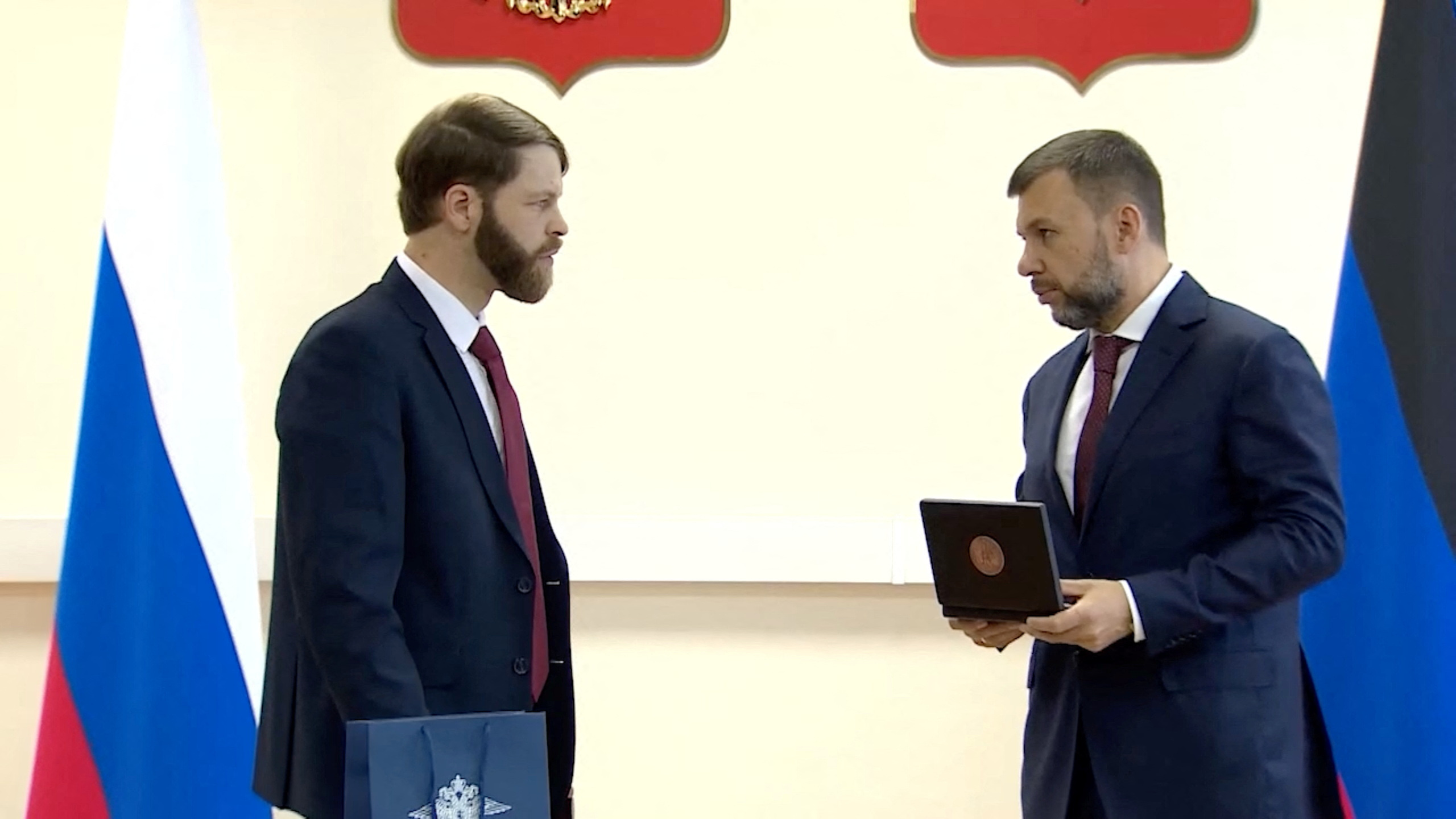
A United States citizen who reportedly provided assistance to Russian operations during the ongoing conflict in Ukraine has been granted Russian citizenship, according to a decree issued by President Vladimir Putin. The decision, which has drawn international attention, raises complex questions about loyalty, legal accountability, and the broader implications of foreign nationals participating in conflicts aligned with adversarial states.
The person, whose identity has not been officially disclosed in the early announcements from the Russian government, is believed to have backed Moscow’s objectives while in Ukraine. Although there is limited information about the specifics and scope of the individual’s involvement, Russian media under state control characterized the individual as having aided Russia’s goals in the ongoing conflict that the Kremlin refers to as its “special military operation” in Ukraine.
Providing Russian citizenship in this context isn’t without precedent. In recent years, Moscow has expedited the process for thousands who have backed the Russian regime or advanced its strategic goals, notably in contentious areas such as eastern Ukraine and Syria. However, what distinguishes this instance is the individual’s initial nationality and the geopolitical impact of an American aligning with Russia during one of Europe’s most heated military disputes since the Second World War.
Analysts perceive the act of bestowing citizenship as having both symbolism and strategy. From a symbolic standpoint, it conveys that the Kremlin is prepared to honor foreigners who demonstrate loyalty to its agenda, particularly if they can offer insider information, esteem, or sway. From a strategic perspective, it could function as an understated form of propaganda, indicating that individuals from countries opposing Russia might shift their ideological or political stance in support of Moscow’s viewpoint.
The declaration comes at a moment when relations between Russia and Western countries, notably the United States, are extremely tense. Washington has been a significant backer of Ukraine, offering military support, intelligence, and humanitarian help since the conflict intensified in 2022. Consequently, the idea of an American citizen assisting Russia adds a dimension of political intricacy and internal legal issues.
In line with U.S. federal legislation, people offering significant assistance to foreign enemies—particularly those participating in conflicts with U.S. stakes—could be prosecuted. The decision to charge this individual or pursue legal action upon their return to U.S. jurisdiction (if that happens) will rely on the precise nature of their deeds and whether those deeds contravened U.S. laws regarding foreign enlistment, spying, or bypassing sanctions.
Legal specialists point out that acquiring citizenship from another nation, including one like Russia, does not absolve an American citizen from responsibility under U.S. law. In reality, having dual nationality in these situations might attract increased attention from entities such as the FBI, the Department of Justice, and the Office of Foreign Assets Control (OFAC) of the Treasury Department, especially if it involves financial dealings, military cooperation, or the exchange of intelligence.
Meanwhile, the Russian government has framed the naturalization as a humanitarian gesture, pointing to what it claims is the individual’s desire to live under Russian protection after assisting efforts in Ukraine. Kremlin-aligned outlets suggest that the person had been in Ukrainian territory where Russian forces operate and decided to formalize their status as a show of alignment with Moscow’s objectives.
From a geopolitical perspective, the action adds complexity to the stories of loyalty and national identity in times of war. As hybrid warfare increasingly includes tactics like information distortion, hiring foreigners, and deploying civilian operatives, the participation of foreign citizens in active battlefields is becoming more common. This scenario exemplifies the degree to which significant nations might exploit personal allegiances as components of extensive political communication strategies.
For the United States, this situation could spark a fresh discussion about the country’s safety, the right to travel freely, and the approach to handling the increasing trend of American citizens getting involved with or backing overseas governments perceived as adversarial. Past incidents of U.S. nationals enlisting in foreign armed organizations—be it in regions like the Middle East, Africa, or Southeast Asia—have resulted in varied legal assessments and court cases, contingent on the type of conflict and the parties engaged.
The response of the U.S. government to this specific incident is still uncertain. Up to now, neither the State Department nor the Department of Justice have issued any public comments about the person’s activities or the consequences tied to the acquisition of Russian citizenship. Nonetheless, experts believe that U.S. intelligence agencies are probably keeping a close eye on the situation in private and evaluating any potential security risks or legal consequences that might result from the case.
The circumstances might affect the relationship between the two countries. Even though U.S.–Russia connections are already at an all-time low, they could deteriorate further if this event is seen as Moscow’s effort to humiliate Washington or create discord by drawing attention to disagreement among American citizens. It could also lead to a re-evaluation of how the U.S. monitors its citizens overseas, especially those known for visiting conflict areas without informing the authorities.
Ultimately, this situation clearly illustrates how modern conflict is fought not just in the field, but also through ideology, information, and personal deeds. A single person’s choice to support an overseas entity—particularly one engaged in a debated and prolonged conflict—can have effects well beyond their immediate surroundings, affecting diplomatic discussions, legal frameworks, and the way the public views things.
As the conflict in Ukraine continues and the global community watches closely, instances like this will remain key indicators of how national allegiances, citizenship, and personal agency are evolving in an increasingly interconnected and politically charged world.