

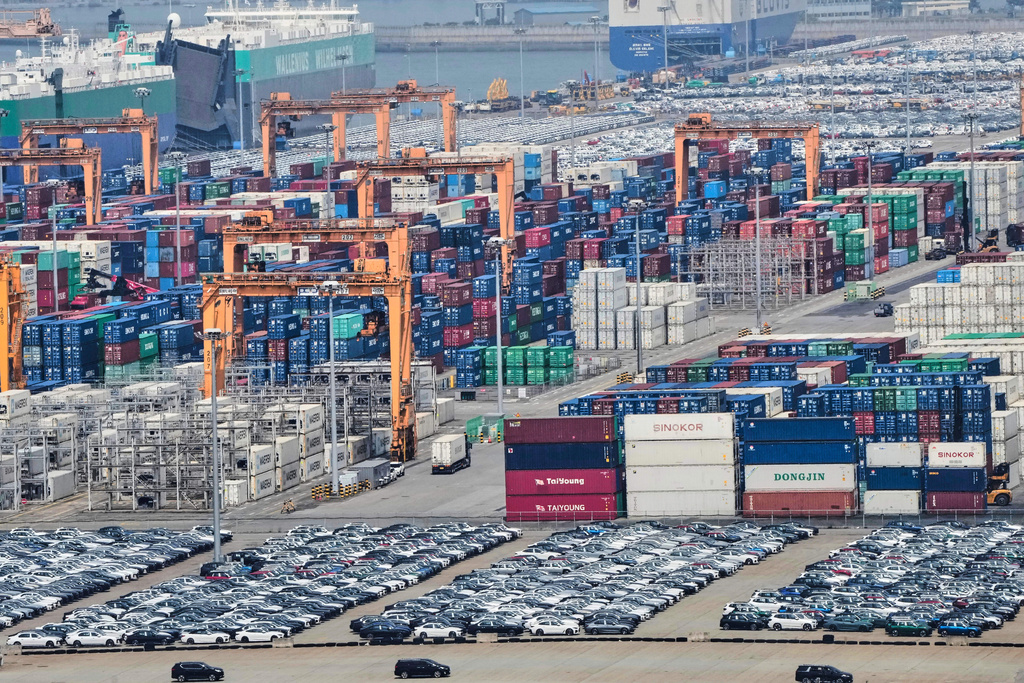
As we approach August 1, significant advancements seem to be occurring in the trade discussions between the United States and the European Union. Representatives from both parties have suggested that an agreement to address the enduring conflict over tariffs is nearly achievable. These negotiations, having stretched over several months, might eventually produce an outcome that alleviates economic strain and reshapes the dynamics of trade interactions across the Atlantic.
At the heart of the discussions is the pressing issue of tariffs imposed by the United States on a range of EU exports. These duties were initially introduced under previous trade policies that claimed to protect domestic industries, notably steel and aluminum, but they triggered swift retaliatory measures from Europe. Since then, both parties have struggled to find common ground, despite repeated attempts to align on shared economic priorities.
The European Union, representing 27 member states, has made it clear that a balanced and fair deal is essential, not just to alleviate the immediate tariff burdens but also to establish a more predictable framework for future trade. Officials familiar with the talks have described the recent tone as “constructive,” with negotiators reportedly narrowing differences on key technical issues.
One of the significant challenges has been the approach to managing industries with high carbon emissions. The EU’s Green Deal and the Carbon Border Adjustment Mechanism (CBAM) have sparked worries among US negotiators, who are concerned that these policies might put American exporters at a disadvantage. Nonetheless, recent progress indicates that both parties are open to finding a middle ground that upholds environmental objectives while ensuring fair competition.
Another challenging matter concerns government support and its impact on international competition. The EU has shown discontent with U.S. subsidies promoting local production and clean energy industries, whereas American officials have raised equivalent issues about EU incentives. As worldwide supply chains adapt in the economy after the pandemic, the influence of government assistance on trade dynamics has gained increased attention.
In spite of these difficulties, the need to finalize the discussions before the August cut-off has resulted in more frequent negotiation sessions. The potential reimplementation of tariffs has increased the urgency, particularly for industries such as agriculture, car production, and aerospace, which would face the greatest impact from reestablished trade obstacles.
Europe and the US both have financial incentives to finalize an agreement. Securing consistent access to the US, a key trade partner for Europe, would provide essential stability for companies facing economic pressures and global political challenges. From the American perspective, settling the tariff disagreement might bolster partnerships at a critical moment when international economic cooperation is necessary to offset increasing worldwide competition, particularly with China.
Analysts point out that the political will to finalize an agreement is stronger now than in recent years. With leadership in both blocs looking to secure economic wins ahead of elections and other political milestones, a trade pact could serve as a strategic victory. However, the timeline remains tight. Any delay or breakdown in talks could see the re-imposition of tariffs, potentially sparking another round of retaliatory measures and dragging relations back into a cycle of dispute.
Some observers remain cautious, noting that several previous attempts at resolution were ultimately derailed by last-minute disagreements. Still, the current atmosphere seems more aligned with resolution than confrontation. The focus on shared goals—economic resilience, green innovation, and global stability—has helped steer the discussions toward mutual benefit rather than zero-sum outcomes.
En el futuro, un acuerdo finalizado podría abrir el camino para una cooperación transatlántica más amplia, más allá de los aranceles. Existe la posibilidad de una colaboración más profunda en áreas como el comercio digital, los estándares tecnológicos y el desarrollo sostenible. Un resultado exitoso también podría fortalecer los sistemas comerciales multilaterales y restaurar la confianza en la capacidad de las principales economías para resolver diferencias a través de la diplomacia.
Although the specifics of the possible deal remain undisclosed, preliminary signs indicate it might encompass gradual decreases in tariffs, reciprocal acknowledgment of standards, and collaborative panels to oversee adherence and address future conflicts. These strategies would aim not only to mitigate the current frictions but also to establish a base for enduring stability in trade between the EU and the US.
With the August 1 deadline approaching, everyone’s focus is on the concluding steps of the talks. Business executives, government officials, and consumers are all anticipating that the result will signify a new era in transatlantic economic ties—characterized by collaboration, stability, and progressive strategies that address the needs of a swiftly evolving global economy.


