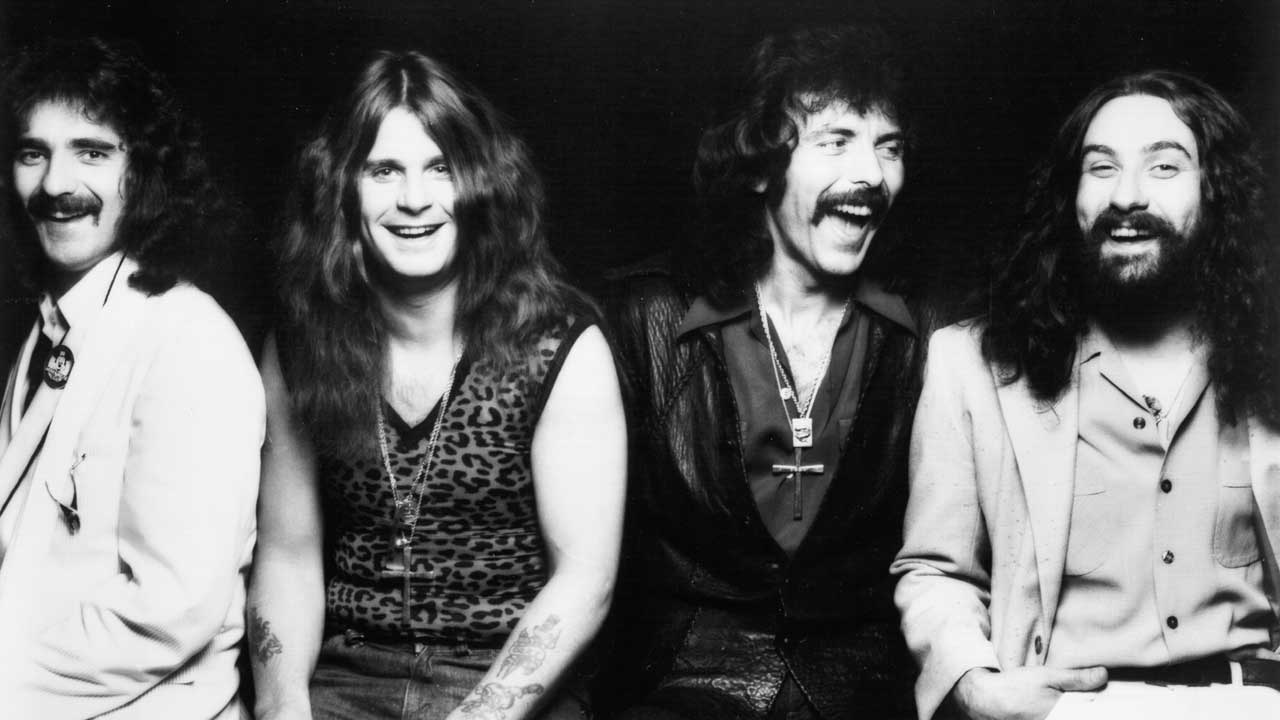
When Black Sabbath appeared from the rough industrial backdrop of Birmingham, England, towards the end of the 1960s, not many foreseen the tremendous influence they would exert on the music scene. By blending elements of blues, hard rock, and an interest in the eerie, the group not only created a distinct musical persona but also established the roots for the genre now known as heavy metal.
During a period when psychedelic rock and progressive exploration were popular on the charts, Black Sabbath brought forth a sound that was more ominous and weighty. Their music was slower, more threatening, and filled with ominous riffs that sharply contrasted the era’s hopeful atmosphere. This stark difference from the flower power movement became a fundamental aspect of their attraction.
At the heart of this new sound was guitarist Tony Iommi, who had to innovate his playing technique out of necessity. Following a severe factory accident that injured his fingers, Iommi was compelled to modify his method. By lowering the pitch of his guitar to reduce the strain on his hands, he inadvertently provided the band with a heavier, more profound sound. This unrefined edge became a signature feature of Sabbath’s music and, in time, the heavy metal genre.
The group’s initial works distinguished them as well. Pieces such as “Black Sabbath,” “N.I.B.,” and “The Wizard” fused haunting thematic content with powerful musical elements. These were not typical tracks about romance or defiance—they addressed malevolence, dread, and personal conflict. Ozzy Osbourne’s unsettling voice brought these subjects to life, whereas Geezer Butler’s bass lines and Bill Ward’s drumming provided a rhythm foundation that was both booming and complex.
But what made Black Sabbath’s music so revolutionary wasn’t just the sound—it was the atmosphere. From the first tolling bell that opens their debut album to the relentless energy of later records, the band created a mood that was oppressive, powerful, and emotionally resonant. This was music that didn’t just entertain; it unsettled. It forced listeners to confront darker emotions, offering catharsis through distortion and volume.
Heralding a pivotal moment, their self-titled debut album, launched in 1970, changed the game. Critics were initially unimpressed, but the audience reacted swiftly and passionately. Fans were captivated by the group’s unrepentant intensity and dark vibe. This record, frequently regarded as the inception of heavy metal, pioneered a blend of blues-influenced rock with dark elements and assertive energy.
Subsequent records such as Paranoid and Master of Reality polished their style even more. Tracks like “Iron Man” and “War Pigs” highlighted the group’s talent in merging catchy melodies with socially aware words and genre-specific riffs. With every album, Black Sabbath broadened their musical range while intensifying their focus on the subjects that had distinguished them from the beginning.
What’s remarkable is how organically this evolution took place. The band didn’t set out to create a new genre—they were simply channeling their influences and their environment. The post-war industrial decay of Birmingham seeped into their music, giving it a gritty, authentic quality that resonated with disaffected youth around the world. In doing so, they gave voice to a generation seeking something more intense and more honest than mainstream rock could offer.
As other bands began to emerge with similar sonic qualities, heavy metal began to coalesce as a distinct musical category. Acts like Judas Priest, Iron Maiden, and later Metallica all traced their lineage back to Sabbath’s groundbreaking work. The tropes that are now staples of the genre—powerful riffs, dark imagery, and an emphasis on atmosphere—can all be traced to the early efforts of Osbourne, Iommi, Butler, and Ward.
The group’s impact went far beyond the music itself. Their style—album art displaying desolate visuals, lyrics exploring themes of existential anxiety, and live performances that mixed drama with intimidation—contributed to the cultural identity of heavy metal. They were not only crafting songs; they were forging a cultural phenomenon that would influence everything from attire to ideology in the years ahead.
Over the years, Black Sabbath’s legacy has only grown. The band has been credited with inspiring not only heavy metal but numerous subgenres, including doom metal, stoner rock, and sludge. Their approach to songwriting, instrumentation, and production became a blueprint for countless artists who followed. Even today, young musicians continue to cite Sabbath as a formative influence, drawn to their uncompromising style and their raw, emotional honesty.
Despite lineup changes, criticism, and periods of inactivity, Black Sabbath remained a central pillar in the world of heavy music. Their eventual farewell tour and final performances were not just celebrations of a band, but of a movement that started with four working-class musicians in Birmingham and grew into a global phenomenon.
Ultimately, Black Sabbath didn’t set out to invent heavy metal—they simply played what felt true to them. But in doing so, they created a sound that had never been heard before, and they opened the door for generations of artists to push boundaries, challenge norms, and explore the darker corners of human emotion through music.
Their transformation from a regional band to worldwide trailblazers demonstrates the strength of genuine expression and creativity. By creating their unique route, Black Sabbath reshaped the boundaries of rock music and introduced a novel approach for people to experience, express, and challenge norms.