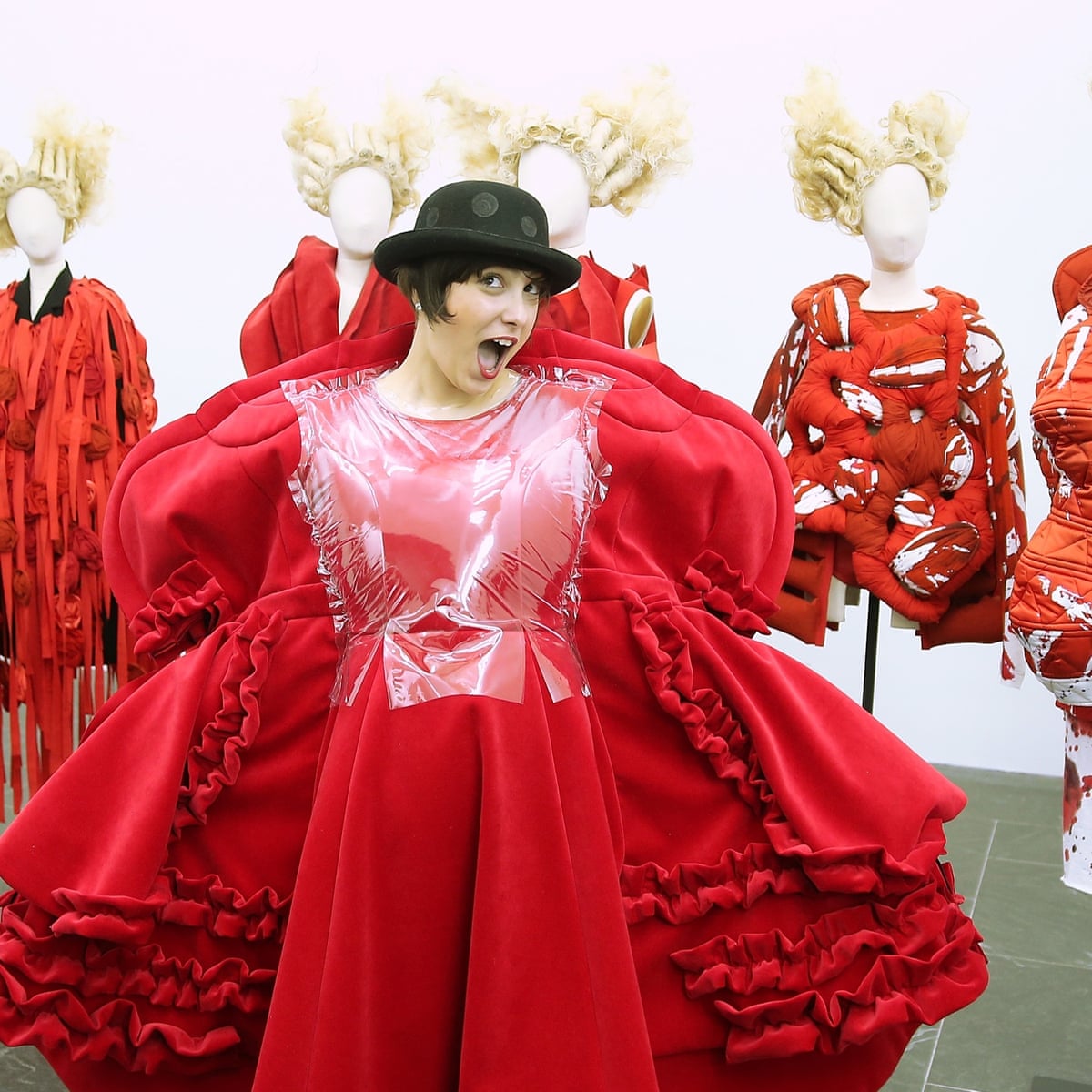
In the realm of modern design, few individuals have redefined the core essence of creativity and conceptual articulation as significantly as Rei Kawakubo. As the visionary behind the impactful fashion brand Comme des Garçons, Kawakubo’s impact extends beyond clothing, shaping architecture, art, and the very vocabulary of conceptual design. To grasp Rei Kawakubo’s significance in this domain, it is essential to examine her ongoing challenge to conventions, her reconstruction of aesthetic frameworks, and her initiation of conversations about design’s fundamental nature and potential.
Challenging Aesthetic Conventions: Deconstruction as Philosophy
At the core of Rei Kawakubo’s conceptual approach lies a radical reevaluation of beauty, form, and structure. Debuting in Paris in the early 1980s, Kawakubo introduced collections that upended Western notions of symmetry and allure. Garments appeared with irregular cuts, unfinished hems, and purposely distressed fabrics. Pieces from the seminal “Destroy” collection (1982) sent shockwaves through the fashion world. Critics referred to her work as “Hiroshima chic,” a moniker that, while controversial, underscored her commitment to discomfort and thought-provocation rather than adornment.
Kawakubo’s philosophical approach functions within a framework of deconstruction. Drawing inspiration from literary and architectural concepts, she challenges conventional dualistic interpretations of gender, objects, and purpose. For instance, the clear boundaries between attire and sculpture become indistinct in her “Body Meets Dress, Dress Meets Body” (Spring/Summer 1997) collection, as exaggerated padding alters the human form, prompting an examination of the structural relationship between the body and garments.
Anti-Fashion and the Void: The Value of Emptiness
Rei Kawakubo is synonymous with the notion of anti-fashion. She facilitates dialogue by denying traditional reference points—her preference for black, asymmetry, and negative space invites contemplation on what is omitted as much as what is present. In her own words, Kawakubo has said she aims to “make clothes that didn’t exist before,” underscoring her belief that design must probe the void to attain new meaning.
Negative space is crucial in her oeuvre. The 2017 Metropolitan Museum of Art retrospective, “Art of the In-Between,” showcased how Kawakubo’s work dwells in liminal zones, her garments often suspended between art and apparel, east and west, abstraction and function. Clothes become a spatial experiment—voids, cutouts, and spaces evoke absence as a legitimate mode of presence.
Conceptual Storytelling: Renouncing the Conventional Narrative
Unlike many designers, Rei Kawakubo refuses to offer overt stories or influences for her collections, often frustrating critics and confounding traditional marketing. Her design process is inherently conceptual; the meaning is communicated through form, tension, and disruption rather than explicit narrative. She compels the observer to form their own interpretation, positioning each collection as a philosophical inquiry rather than an aesthetic solution.
A prime example is the “18th-Century Punk” collection (Autumn/Winter 2016), which superimposed baroque opulence on subversive, shredded structures, denying both historical fidelity and contemporary commercialism. This opposition cultivates an intellectual antagonism—a challenge to complacency in both the creator and the audience.
The Democratization of Design and its Interdisciplinary Influence
Kawakubo’s impact reaches into the realms of architecture and commercial environments, evident in her partnerships with architects such as Zaha Hadid and the cutting-edge aesthetic of Comme des Garçons stores globally. These settings reflect her core beliefs: retail locations featuring surprising spatial layouts, innovative illumination, and distinctive pathways invite patrons to experience fashion as a form of conceptual installation art, moving beyond mere displays of commercial goods.
Her role in making design more accessible is also incredibly significant. Through partnerships with popular brands like H&M and Nike, Kawakubo blurs the lines separating exclusive conceptual art from common clothing, prompting a reevaluation of how attainable design truly is.
Cultural Heritage: Sparking Conversations about Identity and the Self
The deepest insight from Rei Kawakubo’s approach to conceptual design is her demonstration that clothing transcends mere utility or ornamentation. Instead, they serve as conduits for investigating identity, self-awareness, and societal frameworks. Her decision not to differentiate between male and female forms sparked extensive discussions about androgyny and gender within the fashion world. Her ongoing opposition to classification prompts contemplation on how design embodies evolving societal stories.
Her methodology elevates the designer’s position beyond a simple stylist or artisan to that of a philosopher and instigator. Kawakubo’s enduring impact stems not from widespread popularity or sales figures, but from her capacity to provoke unease, conversation, and change. She embodies an ongoing defiance of stagnation, serving as a testament that in conceptual design, genuine advancement emerges not from adherence to norms but from bold inquiry, novelty, and the challenging of preconceived notions. In her hands, design transcends being merely an answer; it evolves into a query in its own right, perpetually open to diverse understandings and fresh interpretations.