

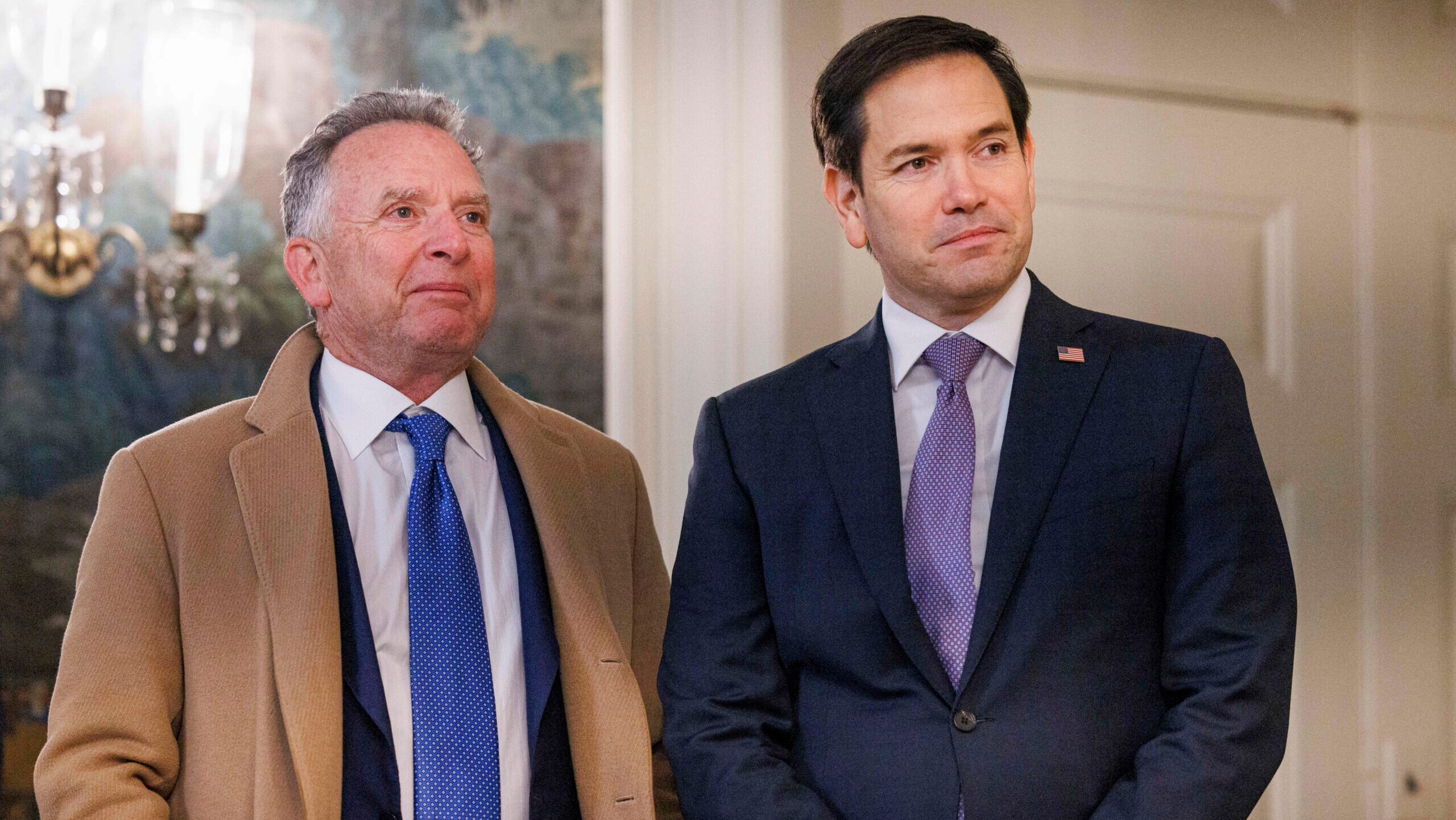
As the war in Ukraine drags on, tensions inside the U.S. administration have surfaced in subtle but consequential ways. What appears outwardly as a unified diplomatic push masks an internal struggle over strategy, authority, and trust that could shape both the outcome of the conflict and America’s global standing.
On a gentle November afternoon in North Carolina, a carefully orchestrated wedding took place across an expansive estate in Winston-Salem. The celebration, refined and festive, welcomed a distinguished attendee: Secretary of State Marco Rubio. Although the ceremony proceeded smoothly, Rubio found his focus divided. In the preceding forty-eight hours, he had been dealing with the repercussions of a leaked U.S.-supported peace proposal for Ukraine, a plan that unsettled American allies by seeming to lean heavily in Moscow’s favor.
The proposal had long been advocated by Steve Witkoff, serving as President Donald Trump’s special envoy and remaining a trusted confidant. The disclosure heightened diplomatic tension across Europe and revived worries in Washington over who was actually guiding U.S. strategy toward Ukraine. For Rubio, the moment proved particularly ill-timed. While his daughters stood in the ceremony as bridesmaids, a separate drama was taking shape—one that highlighted mounting strains within the uppermost ranks of American foreign policy.
A quiet race to the negotiating table
In the days surrounding the wedding, Rubio was getting ready to head to Switzerland for planned talks with Ukrainian officials, discussions meant to bolster U.S. involvement with Kyiv and calm European partners unsettled by the leaked proposal. Without his knowledge, Witkoff had already traveled to the region ahead of time, according to several U.S. officials briefed on the situation.
What drew attention was not just the early exit but the absence of communication. Witkoff reportedly failed to notify Rubio or senior State Department officials about his travel plans, a choice some viewed as an effort to engage in talks on his own and steer negotiations before Rubio arrived. The incident revived earlier worries that Witkoff aimed to circumvent traditional diplomatic channels in favor of a more individualized, direct style closely aligned with President Trump’s instincts.
Rubio eventually arrived in Geneva as scheduled, guaranteeing that no official talks with Ukrainian representatives would move forward without him. The situation avoided any public fallout, yet behind the scenes it strengthened the sense of a growing rift between two senior figures responsible for promoting U.S. interests amid one of the decade’s most intricate geopolitical crises.
Former diplomats watching the situation voiced their discomfort. Lacking a shared grasp of the negotiating approach or of Russia’s intentions, attempts to facilitate peace risk splintering. They maintain that unity at the highest level is not optional but essential for credible diplomacy.
Competing visions for ending the war
At the core of the dispute is a deep divide over the preferred path to ending the war in Ukraine. Witkoff, facing White House pressure to finalize a rapid agreement, has pushed for proposals that assign Ukraine a considerable share of the burden to make concessions. These suggestions have reportedly included yielding certain territories and accepting enduring security vulnerabilities in return for a ceasefire.
Rubio, joined by several other senior officials and key European allies, adopts a sharply contrasting stance, contending that true and lasting peace cannot emerge from granting benefits to acts of aggression, and from this viewpoint they maintain that tougher economic sanctions paired with ongoing military backing for Ukraine are essential to pressure Russia into substantial concessions and to prevent future breaches of international norms.
This divergence has practical consequences. Negotiating positions shape not only the content of peace proposals but also how allies perceive U.S. reliability. European governments, many of which see Ukraine’s fate as inseparable from their own security, have been wary of any plan that appears to legitimize territorial gains achieved through force.
Publicly, the administration has consistently tried to minimize any suggestion of internal friction, with State Department officials maintaining that Rubio and Witkoff remain in sync and operate closely together. Rubio has offered his own favorable remarks about Witkoff, highlighting their collaborative approach and rejecting the idea that any solo diplomatic efforts are underway.
Privately, however, current and former officials suggest a more complicated reality—one in which parallel lines of authority blur accountability and complicate decision-making.
Influence, accessibility, and atypical diplomatic approaches
Steve Witkoff’s role within the administration is unconventional by design. A billionaire real estate developer with no formal diplomatic background, he has embraced the role of problem-solver and emissary with characteristic confidence. He travels on his own private jet, meets foreign leaders directly, and operates with a level of autonomy that would be unusual for a career diplomat.
His close relationship with President Trump is central to his influence. Trump has repeatedly praised Witkoff’s dealmaking skills and personal style, citing his involvement in securing a ceasefire in Gaza as evidence of his effectiveness. Witkoff’s approach reflects Trump’s broader preference for personalized diplomacy—direct engagement over institutional process.
That influence has been reinforced by the presence of Jared Kushner, the president’s son-in-law, who has accompanied Witkoff on key trips despite holding no formal government position. Kushner’s previous role in Middle East negotiations gives him credibility within Trump’s inner circle, further strengthening Witkoff’s hand.
Critics warn that this buildup of informal authority sets off alarm bells, arguing that bypassing traditional diplomatic channels could erode policy consistency and distance allies who rely on steadier forms of engagement, while some lawmakers and European officials have voiced deeper unease, suggesting that Witkoff might place too much trust in Russian assurances without applying adequate skepticism.
Diplomatic protocol under strain
The strain between formal and informal diplomacy became particularly visible during an episode in Paris earlier this year. Rubio had been scheduled to travel to France for meetings related to Ukraine. Shortly before his departure, his team learned that Witkoff had independently arranged a private meeting with French President Emmanuel Macron.
When Rubio tried to enter the conversation, French officials allegedly signaled that Witkoff’s consent was needed. For a sitting secretary of state, the moment proved highly uncomfortable. After several efforts, Rubio’s staff finally contacted Witkoff, who ultimately allowed Rubio to join the meeting.
Although Rubio later held his own separate discussion with Macron, the incident underscored concerns about role confusion and protocol. Diplomacy, particularly among allies, relies heavily on clear lines of authority. When those lines blur, even close partners may be uncertain about whom they are truly negotiating with.
Similar concerns resurfaced a few weeks later, when Witkoff organized discussions with Ukrainian officials in Florida, and Rubio allegedly became aware of the meeting only after Kyiv’s representatives contacted his office seeking clarification; to some observers, these incidents appeared to reveal a recurring pattern rather than isolated errors.
Safety issues and potential communication hazards
Beyond policy disagreements, Witkoff’s methods have sparked concern over security practices. Several current and former officials have questioned his reliance on private travel and communications, particularly during trips to Russia. The use of personal aircraft and non-government communication systems is seen by some as introducing unnecessary vulnerabilities.
These worries intensified following reports that a transcript of a phone call between Witkoff and a senior Russian official had been leaked. The conversation reportedly included strategic advice on coordinating a potential call between Presidents Trump and Putin. While the source of the leak remains unclear, its existence highlighted the risks inherent in sensitive communications.
Russian officials have openly stated that they rely on both encrypted channels and commercial messaging apps when communicating with Witkoff, and security specialists point out that these tools, though practical, can still be vulnerable to advanced surveillance operations. Because Witkoff holds a pivotal position in sensitive negotiations, foreign intelligence agencies would likely view him as a highly valuable target.
In response, the administration has indicated that further security measures have been put in place, including secure communication systems available for use while traveling, yet several officials remain uneasy and point to lingering concerns about the consistent observance of protocols.
Revising the peace proposal
The leaked peace plan that first ignited controversy has now been significantly reworked, and following Rubio’s involvement along with discussions with Ukrainian officials, several clauses seen as especially detrimental to Kyiv were either revised or eliminated, including limits on NATO deployments across Eastern Europe and suggestions to sharply scale back Ukraine’s military strength.
Despite these changes, the proposal remains a work in progress. Russia has criticized the revisions and signaled a preference for returning to the original framework developed by Witkoff. Negotiations continue, with U.S. delegations meeting Ukrainian counterparts in various locations, including a recent session in Miami involving Witkoff, Kushner, and White House staff.
How these discussions unfold will hinge not only on conditions on the ground but also on the U.S. administration’s ability to offer a clear, cohesive strategy, while allies watch intently, mindful that political rifts in Washington might blunt its influence in any negotiations.
The challenges confronting U.S. leadership
The ramifications of this internal conflict extend well beyond Ukraine, with the credibility of U.S. leadership and the trust allies place in Washington’s commitments hanging in the balance, while diplomacy carried out through competing channels risks muddling messages for partners and emboldening adversaries eager to capitalize on ambiguity.
Rubio faces the difficulty of steering through a political landscape where established diplomatic influence competes with direct access to the president, while Witkoff must prove that unconventional approaches can achieve results without weakening security or the cohesion of alliances.
Presidential administrations have always been marked by internal debates and rivalries. What makes this moment distinctive is the scale of the issue at hand and the visibility of the divide. The war in Ukraine is not a peripheral conflict; it is a defining test of international order in the post–Cold War era.
Whether the administration can reconcile its internal differences may determine not only the shape of any eventual peace agreement, but also how history judges America’s role in one of the most consequential crises of the early twenty-first century.


