

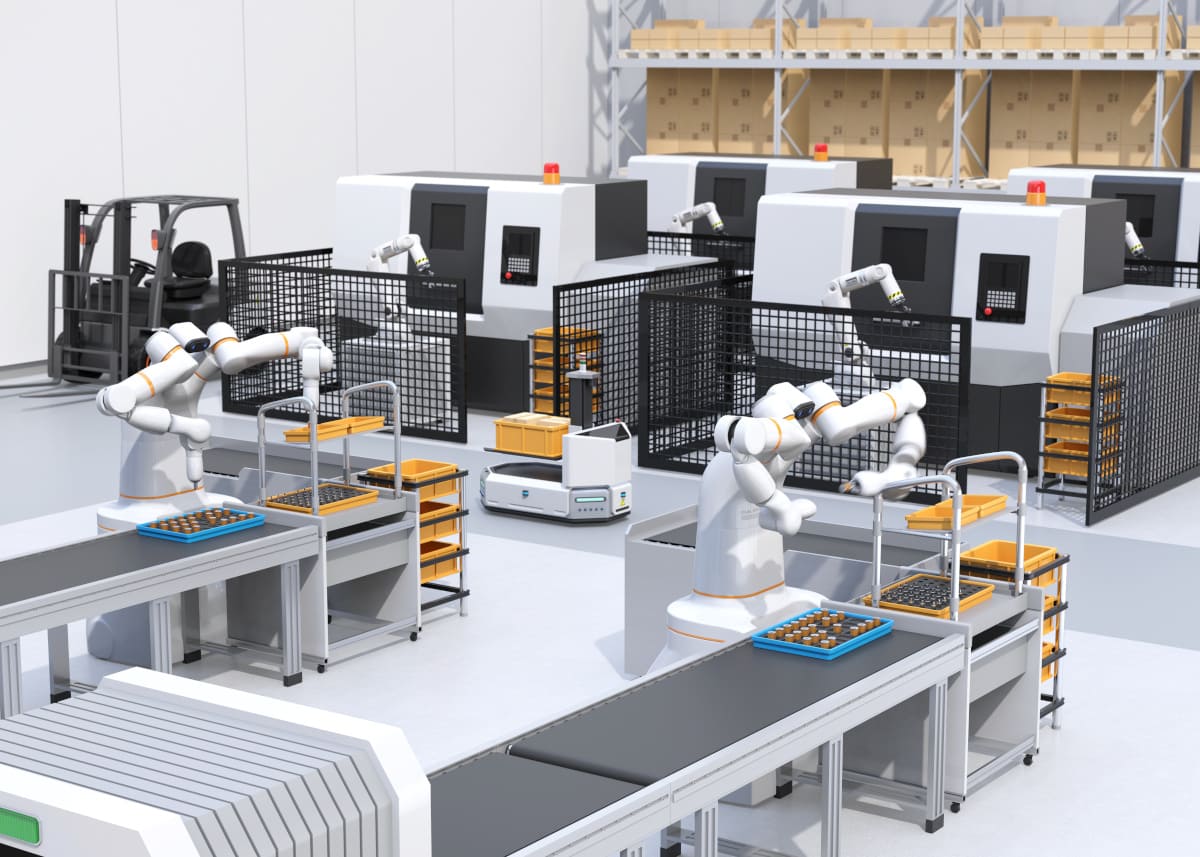
The United States is rapidly reshaping its industrial landscape through smart manufacturing, propelled by swift developments in industrial robotics, artificial intelligence, automation technologies, and digital connectivity. This evolution aligns with a national effort to reinforce competitiveness, improve supply chain resilience, and elevate productivity across major industries such as automotive, aerospace, electronics, pharmaceuticals, and advanced materials.
Smart manufacturing blends cyber-physical systems, industrial internet platforms, cloud computing, and data analytics within production settings, allowing operations to shift from standalone machinery and manual supervision to interconnected networks that gather, interpret, and respond to real-time information, enabling predictive upkeep, flexible manufacturing, and more accurate quality control.
Industrial Robotics as the Backbone of Automation
Industrial robots play a central role in modern U.S. factories. According to industry data, the United States consistently ranks among the top global adopters of industrial robots, with strong demand in automotive assembly, battery manufacturing, semiconductor fabrication, and logistics.
Robotic systems are currently performing:
- Automotive facilities rely on high-accuracy welding and component assembly
- Electronics manufacturing involves collaborative operations carried out beside human technicians
- Semiconductor sites perform automated evaluations supported by machine-vision systems
- Warehouses and distribution hubs use autonomous solutions for moving and managing materials
A notable trend is the rise of collaborative robots, designed to safely operate near human workers without extensive physical barriers. These systems reduce repetitive strain injuries while allowing skilled workers to focus on complex tasks such as system optimization and quality oversight.
Automotive manufacturers across the Midwest, for instance, have adopted robotic welding cells paired with AI-guided quality inspection, yielding notable boosts in throughput, fewer defects, and accelerated product development timelines.
Artificial Intelligence and Data-Driven Production
Automation alone does not define smart manufacturing; intelligence does. Artificial intelligence and machine learning enable systems to predict failures, optimize production schedules, and detect anomalies in real time.
Predictive maintenance systems analyze data from sensors embedded in motors, conveyors, and machining equipment to anticipate potential breakdowns in advance, allowing problems to be resolved before they develop. In aerospace manufacturing, AI models monitor vibration patterns in milling machines, reducing unplanned shutdowns and preventing costly production disruptions.
Machine vision systems driven by advanced deep learning models can examine thousands of parts every hour, spotting microscopic flaws that human inspectors would miss, while in semiconductor production, irregularities at the nanometer level are often identified and addressed early in the workflow, boosting overall yield and cutting material waste.
These capabilities deliver a tangible boost to productivity, as research conducted by manufacturing institutes in the United States indicates that predictive analytics may lower maintenance expenses by as much as 20 percent while reducing downtime in select high-value operations by nearly half.
Returning Manufacturing to Domestic Grounds and Bolstering the Resilience of the Supply Chain
Recent worldwide upheavals have sharpened attention on national manufacturing capabilities, and as automation and robotics lessen dependence on low-cost labor advantages, bringing production back home has become financially practical.
Advanced facilities that manufacture semiconductors, electric vehicle batteries, and medical equipment are increasingly turning to automated production lines to counter rising labor expenses, and by integrating robotics with digital twins and simulation technologies, companies can devise adaptable plants that respond to changing demand with minimal reconfiguration.
The expansion of domestic semiconductor fabrication plants underscores this shift, as their advanced cleanrooms depend on robotic wafer-handling systems and AI-driven controls to uphold extremely precise conditions, and these investments simultaneously fortify national supply chains and elevate technological leadership.
Workforce Transformation and Skills Development
Automation’s expansion does not remove the need for human workers; instead, it reshapes the qualifications that roles require. Demand is steadily rising for specialists with expertise in robotics programming, data analysis, systems integration, and cybersecurity.
Community colleges, technical institutes, and public-private partnerships are expanding their advanced manufacturing technology training options, while apprenticeships in mechatronics and industrial automation are helping significantly reduce the existing skills gap.
Rather than replacing labor entirely, automation often augments human capability. In many facilities, operators supervise robotic fleets, analyze performance dashboards, and intervene in complex scenarios that require judgment and experience.
Blending the Industrial Internet with Robust Cybersecurity
Smart manufacturing relies on connected devices and industrial internet platforms. Sensors embedded across machinery transmit real-time data to centralized systems for analysis. Cloud-based platforms allow multi-site coordination and remote monitoring.
As connectivity continues to broaden, cybersecurity risks escalate as well, driving manufacturers to embrace zero-trust models, enhance data-exchange encryption, and maintain continuous network monitoring to protect vital infrastructure. Federal initiatives and sector standards strongly stress safeguarding intellectual property and preventing any disruptions to operational stability.
In automated production settings, cyber resilience is now widely viewed as equally vital as physical reliability.
Driving Sustainable Progress Through Smart Technologies
Automation technologies also support broader sustainability objectives by enabling smart energy management systems to regulate power consumption according to real-time production needs, cutting down on waste, while AI-powered optimization tools help lower the use of raw materials and decrease scrap generation.
In advanced steel and chemical plants, digital monitoring of emissions and energy intensity enables compliance with environmental regulations while lowering operational costs. Robotics-based precision in additive manufacturing reduces excess material usage, further supporting sustainable production models.
Notable Examples Highlighting Industrial Advancement
Several sectors illustrate the tangible impact of smart manufacturing in the United States:
- Automotive: Electric vehicle production lines integrate robotics, battery automation, and digital twins to accelerate innovation cycles.
- Aerospace: Automated fiber placement robots enhance composite material manufacturing for lightweight aircraft structures.
- Pharmaceuticals: Continuous manufacturing systems use real-time analytics to ensure consistent drug quality and rapid scaling.
- Logistics: Autonomous mobile robots streamline warehouse operations, increasing fulfillment speed and accuracy.
These examples demonstrate that robotics and automation technologies reach far beyond any single industry, driving a sweeping, system‑wide transformation across the manufacturing landscape.
The Strategic Edge Gained Through Adopting Technological Integration
The rise of smart manufacturing across the United States signals far more than refreshed machinery; it marks a broad evolution of the nation’s industrial approach, where the integration of robotics, artificial intelligence, advanced data analysis, and reliable connectivity drives manufacturers toward greater efficiency, improved adaptability, and a stronger capacity to withstand global volatility.
As digital and physical infrastructures become increasingly interwoven, the American industrial landscape is evolving into an intelligent, interconnected ecosystem, where technological progress, workforce development, and targeted investment merge to reinforce a dedication to innovation-driven manufacturing, crafting a future in which precision and adaptability stand as the essential foundations of industrial success.


