

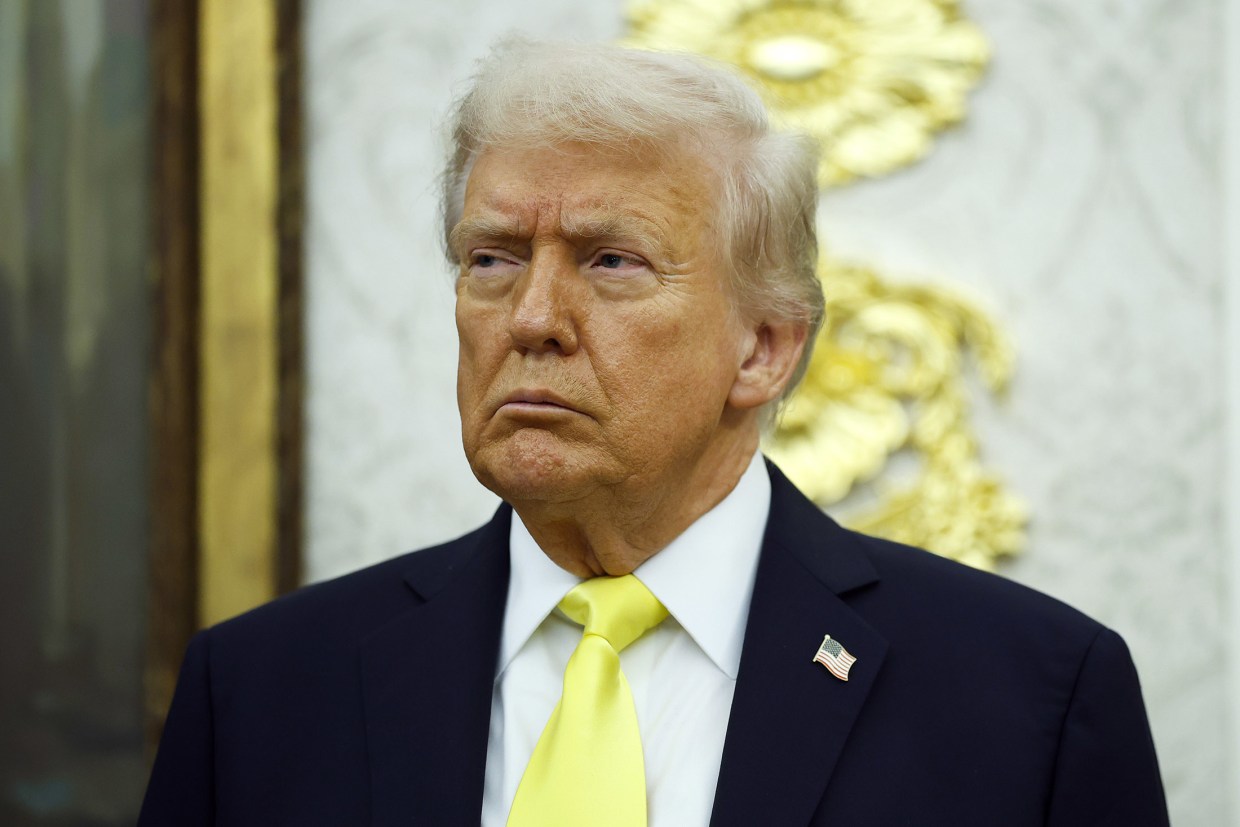
With the United States government now in its 21st day of a partial shutdown, the political environment is still fraught with unpredictability. President Donald Trump’s administration is experiencing increasing pressure from both domestic and international fronts. As internal tensions escalate, global relations are also under duress, with crucial discussions between Trump and Russian President Vladimir Putin currently postponed. This shutdown, caused by a stalemate regarding border security financing, has resulted in a deadlock affecting the federal workforce, government operations, and foreign policy.
Political Stalemate and the Current Closure
The ongoing government shutdown, now in its third week, is a direct consequence of political divisions within Congress. The central issue at the heart of this crisis is President Trump’s demand for $5.7 billion in funding for a border wall along the U.S.-Mexico border, which he claims is necessary to curb illegal immigration and secure national borders. However, Democratic lawmakers have refused to approve the wall funding, arguing that it is an inefficient and expensive solution to the complex issue of border security. As a result, many government operations have been suspended, and hundreds of thousands of federal workers are furloughed, with some working without pay.
Global Diplomacy in the Wake of the Shutdown
The political stalemate has led to significant repercussions, affecting not only internal affairs but also the United States’ position internationally. A notable outcome is the deferral of crucial diplomatic discussions involving President Trump and President Putin. These discussions, initially anticipated to further dialogue on arms control and global security matters, are now postponed indefinitely because of the current situation in Washington. The choice to delay these talks highlights the wider diplomatic hurdles encountered by the Trump administration, especially as it manages increasingly intricate interactions with Russia.
Even though internal issues are currently the main focus, the global consequences of the U.S. government’s closure cannot be overlooked. The U.S.’s failure to show a united stance and participate in vital diplomatic talks with significant world figures such as Putin casts doubt on its capacity for global leadership. International onlookers are closely monitoring the events in Washington, given that the shutdown is also impacting the United States’ capacity to meet its commitments in various international organizations, including the United Nations and NATO.
Internal Repercussions: Pressure on {{Federal}} Employees and Public Services
At home, the circumstances are just as severe. Government workers, whose salaries are tied to the federal budget, are finding it difficult to manage financially as the shutdown continues. Certain federal departments have implemented backup strategies, while others have completely halted their operations. National parks, cultural institutions, and numerous federal offices are either shut down or functioning with fewer personnel, affecting millions of citizens who depend on public services. Beyond the individual financial hardship faced by federal employees, the shutdown is also impeding essential governmental duties, ranging from tax submissions to healthcare provisions, thereby intensifying public discontent.
The political stalemate has also underscored the growing division within the American political framework. While President Trump and the Republican Party remain steadfast on the border wall, numerous Democrats advocate for broader immigration reform and prioritize other concerns, including healthcare and infrastructure. This core disagreement makes reaching a consensus progressively challenging, resulting in a deadlock with no apparent end.
Public Discontent and Growing Pressure on Political Leaders
In the face of this prolonged shutdown, public opinion has become increasingly critical of the political leaders involved. Both Trump and House Speaker Nancy Pelosi, as well as Senate Majority Leader Mitch McConnell, are facing growing disapproval from the public. Polls indicate that a majority of Americans blame the president and congressional Republicans for the shutdown, with many expressing frustration over the lack of progress in resolving the issue. As the shutdown drags on, the political ramifications for the leaders involved will likely intensify, further complicating efforts to reach a compromise.
The shutdown is also having a significant impact on the U.S. economy. While the full extent of the economic damage is still to be determined, analysts predict that the longer the shutdown continues, the more severe its effects will be. Government contractors, small businesses, and even the broader economy are feeling the pinch as millions of dollars in economic activity are put on hold. This is especially true for sectors that depend heavily on government spending, such as defense, research, and infrastructure development.
Searching for Solutions: Can Bipartisanship Prevail?
Despite the ongoing challenges, there is still hope that the situation can be resolved. Some lawmakers are advocating for short-term funding measures or a temporary resolution that would allow the government to reopen while negotiations continue. Others are calling for a broader, bipartisan approach to solving the border security debate and addressing other pressing issues, such as healthcare, immigration reform, and climate change. However, with both sides dug in on their positions, finding a resolution may take time.
As the U.S. government shutdown continues, the world is left watching closely. The outcome of this political standoff will likely have far-reaching consequences, both for domestic policies and international relations. President Trump’s interactions with Putin, along with other diplomatic initiatives, will remain in limbo until the situation is resolved. Meanwhile, the impact on federal employees, government services, and the broader economy will continue to shape the conversation in Washington and beyond.
The Broader Implications of the Shutdown on U.S. Governance
This shutdown is more than just a political crisis; it is a test of the U.S. government’s ability to function effectively and efficiently. As the impasse drags on, the pressure on lawmakers to find a solution will only intensify, and the public will be watching closely to see if they can rise to the challenge. The political future of the Trump administration, as well as the broader future of U.S. governance, could be shaped by how the current crisis is handled. With each passing day, the pressure on both political parties to end the shutdown and move forward grows. Only time will tell if a resolution can be reached, and what impact it will have on the direction of the nation.


