

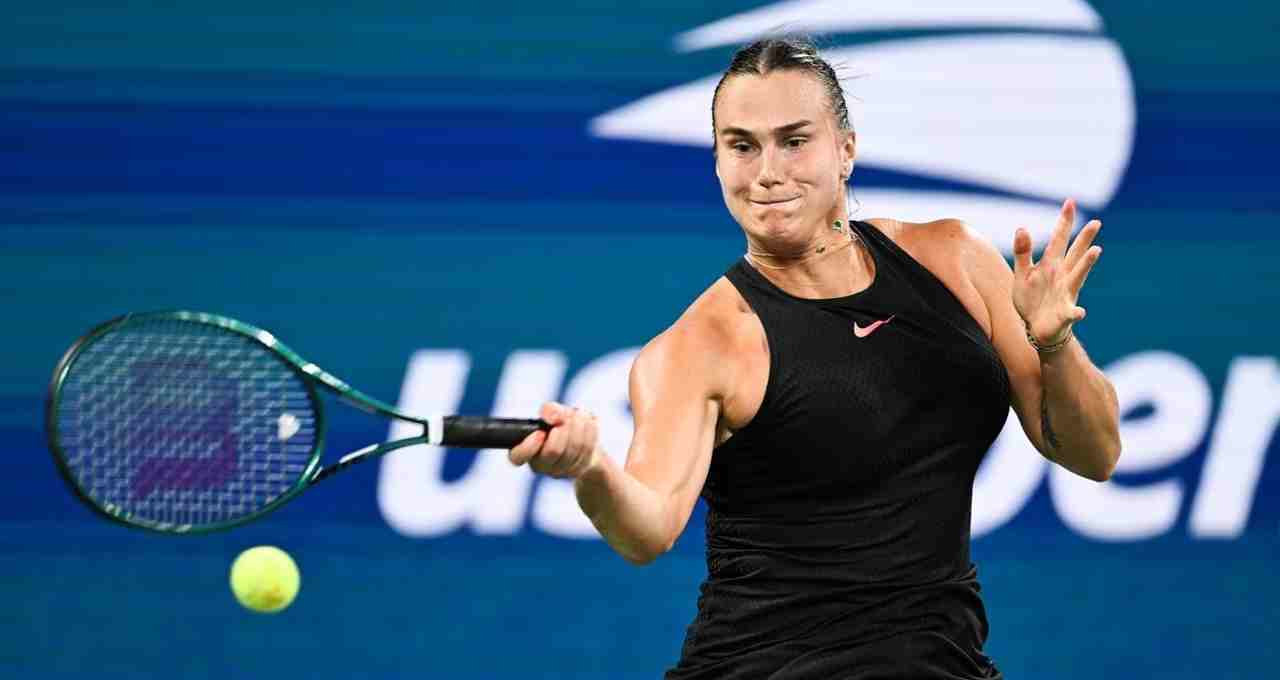
Aryna Sabalenka, the defending champion at the US Open, has advanced to the semifinals without having to play a full match after her scheduled opponent, Markéta Vondroušová, was forced to withdraw. This unexpected development marks a significant turning point in the tournament, as Sabalenka continues her quest to retain the title she won last year.
The automatic advancement marks another achievement in Sabalenka’s impressive series in New York, where she has consistently displayed strength, accuracy, and mental fortitude in all her games. Although many expected a fierce contest between the two athletes, Vondroušová’s inability to participate owing to injury signifies that the long-anticipated confrontation will not occur.
Sabalenka’s journey in the tournament has been characterized by dominant performances, and this advancement gives her additional time to rest and prepare for the upcoming rounds. Physical recovery and energy management often play crucial roles in Grand Slam events, and a walkover at this stage could offer the Belarusian star a strategic advantage over future opponents who have endured grueling matches to get this far.
The US Open has traditionally been an arena where tenacity and flexibility lead to achievement, and Sabalenka’s skill in staying concentrated despite unexpected timetable adjustments demonstrates her growth as an athlete. Grand Slam tournaments frequently present unanticipated situations, and the skill to manage these smoothly distinguishes the elite players from the others. Sabalenka has consistently demonstrated that she excels when challenged and grasps the complexities of competitive play.
For Vondroušová, pulling out is certainly a setback. Injuries are an inherent aspect of sports, often interrupting the flow and progress athletes achieve through extensive preparation. Being the reigning Wimbledon champion, Vondroušová arrived at the US Open with great anticipation, and supporters were keen to see how her strategic play would stack up against Sabalenka’s strong baseline strategy. Regrettably, this intriguing matchup will stay as a theoretical topic this year.
The withdrawal highlights larger issues regarding the physical challenges faced by professional tennis players throughout a busy season. With events happening on various continents and playing surfaces, handling injuries and recuperation has become as crucial as the matches themselves. Teams specializing in sports science and player support are relentlessly striving to minimize the chances of injuries, yet the intense level of competition frequently drives athletes to their breaking points.
Sabalenka’s progress to the semifinals keeps her on track to potentially achieve back-to-back titles at Flushing Meadows, a feat that would cement her status as one of the most dominant players on the current women’s tour. Winning consecutive US Opens is a rare accomplishment, reflecting consistency, mental toughness, and adaptability to changing conditions and opponents.
The upcoming stage is expected to be quite challenging, given that the competitors left in the competition are high-ranking and have shown excellent performances in the event. Sabalenka will need to focus on analyzing possible semifinal rivals, polishing her strategies, and keeping the self-assurance that has characterized her recent achievements on hard surfaces.
Beyond the competition, the story of Sabalenka’s advancement also highlights the unpredictability of professional tennis. Fans and analysts alike understand that while skill and strategy determine outcomes on the court, circumstances beyond a player’s control can dramatically alter the trajectory of a tournament. For spectators, the absence of a marquee quarterfinal is a loss, but anticipation for the semifinals remains high, especially with Sabalenka still in contention.
As the tournament moves closer to its climax, all eyes will be on Sabalenka to see if she can continue her march toward another championship. Her blend of explosive power and improving tactical versatility makes her a formidable presence against any opponent. With added rest and preparation time, she enters the semifinals not only as the defending champion but also as a player with renewed energy to face the final stages of one of tennis’s most prestigious events.
The US Open continues to be a showcase of athletic excellence, unexpected twists, and emotional highs and lows that keep fans engaged from the opening round to the championship match. Sabalenka’s latest development is a reminder that in this sport, persistence, preparation, and adaptability often define champions as much as pure talent. Whether this unexpected advantage will propel her to another title remains to be seen, but one thing is clear: Sabalenka is still firmly in the hunt for glory in New York.


