
Our website uses cookies to enhance and personalize your experience and to display advertisements (if any). Our website may also include third party cookies such as Google Adsense, Google Analytics, Youtube. By using the website, you consent to the use of cookies. We have updated our Privacy Policy. Please click the button to view our Privacy Policy.

International

Why recycling alone won’t solve plastic pollution

Recycling’s Limits: Why It Won’t End Plastic Pollution

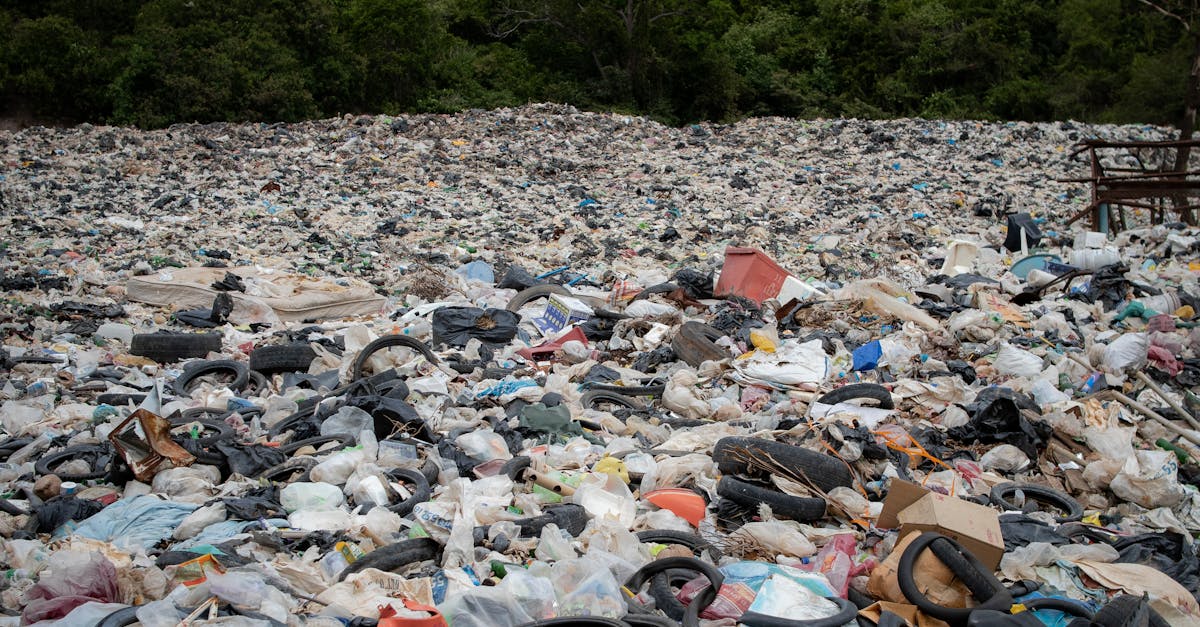
Plastic recycling is frequently portrayed as a universal remedy for plastic pollution, yet the truth is far more nuanced. While recycling plays a meaningful role, it cannot singlehandedly eliminate plastic waste due to technical, economic, behavioral, and structural constraints. This article explores these limitations, presents supporting evidence and examples, and highlights additional strategies that need to accompany recycling to achieve lasting impact.Today’s scale: exploring how production, waste, and the true effects of recycling come togetherGlobal plastic output has climbed to more than 350 million metric tons per year in recent times, and a pivotal review of historical production and disposal…
Read More
What critical minerals are and why they’re contested

Unpacking Critical Minerals: Their Importance and Conflicts

Critical minerals are naturally occurring elements and compounds on which modern economies rely for manufacturing, the energy transition, and defense, yet their supply chains often remain fragile or highly concentrated. Governments and analysts generally evaluate how critical a mineral is by considering two main factors: its economic significance to essential technologies and the likelihood that its supply could face disruptions. This combination of strong demand and elevated exposure to supply risks is what classifies a mineral as “critical.”Why they matter nowThe global shift to electrification, renewable energy, digital infrastructure, and advanced defense systems has multiplied demand for certain minerals. Lithium,…
Read More
Why biodiversity is an economic security issue

Why Biodiversity Matters for Economic Security

Biodiversity, encompassing the richness of life found in genes, species and ecosystems, is far from an abstract environmental notion reserved for researchers or conservation advocates. It forms the foundation for the products, services and stability that contemporary economies rely upon. When biodiversity erodes, repercussions spread through supply networks, strain public finances, disrupt corporate accounts and influence national security. Viewing biodiversity as an economic security concern shifts it from a conservation focus to a core pillar of both national and global economic stability.The connection between biodiversity and economic stabilityProvisioning services and supply chains. Biodiversity supplies food, timber, medicines, fibres and genetic…
Read More
Why food prices rise even when harvests are strong

Strong Harvests, Still High Prices: The Food Cost Mystery

Strong harvests are a natural expectation for lower food prices, but the relationship between production volumes and retail prices is far from direct. Prices reflect the interaction of physical supply, logistics, policy, finance, and market structure. A good harvest in tonnes does not automatically mean abundant, cheap food on every table. Below are the main mechanisms that explain why food prices can rise even when aggregate harvests look strong.Primary factorsMismatch between global supply and exportable supply: A country can record a big harvest but still export little because domestic demand, government procurement, or quality issues absorb the crop. For example,…
Read More
Why regulating social media is so hard globally

Social Media Regulation’s Global Quandary

Social media platforms mediate information, politics, commerce, and private lives across borders. Regulating them is not simply a matter of drafting rules; it involves reconciling competing legal systems, technical limits, economic incentives, political power, cultural differences, and operational realities at an unprecedented global scale. Below I map the core challenges, illustrate them with cases and data points, and sketch pragmatic directions for progress.1. Scale and Technical ConstraintsSheer volume: Platforms accommodate billions of users and handle an immense stream of posts, messages, photos, and videos each day. While automated tools assist, human judgment is still required for subtle or context-heavy decisions,…
Read More
Why food security remains fragile

Understanding Vulnerable Food Systems

Food security is the condition in which all people, at all times, have physical and economic access to sufficient, safe, and nutritious food. Despite progress in agricultural productivity and declining child mortality in some regions over recent decades, global food security remains fragile. Multiple interacting drivers — environmental, economic, political, social, and technological — continuously undermine availability, access, utilization, and stability of food supplies. The following analysis explains the main causes, illustrates them with cases and data trends, and highlights practical pathways to reduce fragility.Fundamental factors behind fragilityConflict and instability: Armed conflict is the single largest driver of acute food…
Read More
Iranians confront a post-Khamenei reality with relief, disbelief and anxiety

The End of an Era: Iran’s Post-Khamenei Landscape

For the first time in decades, Iranians awoke to a nation no longer led by Ayatollah Ali Khamenei, after coordinated US-Israeli strikes claimed his life, leaving the country facing a profoundly uncertain chapter.Diverse reactions unfolding nationwideThe news of Khamenei’s death has triggered a broad array of reactions throughout Iran, where residents in the capital and other major cities voiced restrained optimism, seeing the conclusion of his decades-long leadership as a moment that might reshape the country’s future. In several districts, impromptu celebrations broke out as crowds honked car horns, waved garments, and even pulled down monuments linked to the Islamic…
Read More
What influence operations are and how to spot them

Detecting Influence Operations: A Practical Handbook

Influence operations are organized attempts to steer the perceptions, emotions, choices, or behaviors of a chosen audience. They blend crafted messaging, social manipulation, and sometimes technical tools to alter how people interpret issues, communicate, vote, purchase, or behave. Such operations may be carried out by states, political entities, companies, ideological movements, or criminal organizations. Their purposes can range from persuasion or distraction to deception, disruption, or undermining public confidence in institutions.Key stakeholders and their driving forcesInfluence operators include:State actors: intelligence services or political units seeking strategic advantage, foreign policy goals, or domestic control.Political campaigns and consultants: groups aiming to win…
Read More
How shared river agreements prevent conflict

Shared Water Resources: Preventing Disputes with Agreements

Rivers often flow across political boundaries in ways that defy modern territorial concepts. More than 150 nations rely on transboundary river basins, and over 260 international river and lake systems cut across national borders. In regions where water is scarce or unevenly spread, competition may intensify and lead to diplomatic strain or even military displays. In contrast, well-crafted shared river agreements provide cooperative frameworks that transform potential conflict zones into stable, jointly managed resources. This article outlines how these agreements help avert disputes, offering examples, data, and practical insights.Primary hazards linked to unregulated transboundary riversUncoordinated use of a shared river…
Read More
The dilemmas of content moderation online

Addressing the Dilemmas of Digital Content Moderation

Online content moderation sits at the intersection of technology, law, business incentives, and human values. Platforms must balance the protection of users from harm with respect for free expression, operate across thousands of jurisdictions, and make split-second decisions at a scale of millions or billions of posts. The result is a set of persistent dilemmas: what to remove, what to label, how to enforce rules consistently, and who decides.Key dilemmas clarifiedSafety versus free expression. Strict enforcement can curb harms tied to harassment, hate, and misinformation, yet it may also sweep up valid political conversations, satire, or voices from marginalized groups.…
Read More